
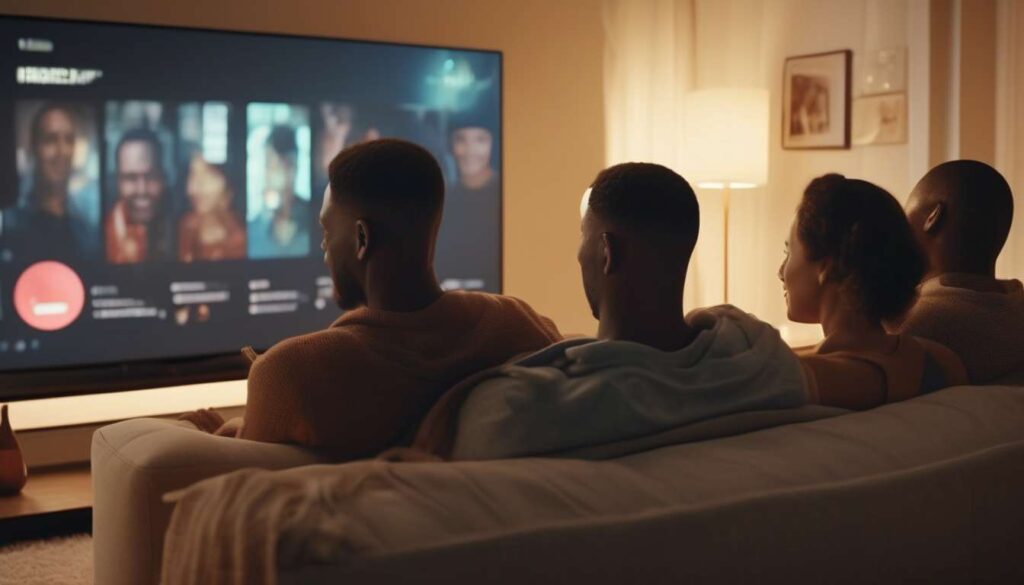
As recent reports show a steady rise in subscription-based adult streaming alongside renewed regulatory attention, we find ourselves reassessing who is included in digital intimacy.
We recognize that as platforms grow and mainstream acceptance shifts, accessibility features remain uneven and often overlooked for adult content.
We are compelled to examine how captions, audio descriptions, customizable interfaces, and privacy-focused account controls can either enable or exclude viewers with disabilities.
We must balance legal compliance, user safety, and respectful design while navigating social stigma and platform liability concerns.
By viewing accessibility as essential—not optional—we can expand market reach, uphold dignity, and foster safer, more inclusive experiences.
Together we will explore practical improvements, industry trends, and ethical considerations that platforms can adopt to better serve diverse adult audiences, ensuring that pleasure, education, and personal expression are accessible to everyone, regardless of ability.
Accessibility Audit Framework
We assess platform accessibility through a structured audit framework that examines content, UI, navigation, and support systems against legal standards and user needs.
We map user journeys, interview diverse community members, and run task-based tests to identify barriers that prevent people from feeling welcome.
From testing, we prioritize accessible design improvements for adult movie streaming platforms that remove friction:
- Clear labeling
- Scalable interfaces
- Logical layout
- Consistent keyboard and screen-reader support
We evaluate onboarding, account management, and payment flows so everyone can join and remain with dignity.
Compliance checks against WCAG and regional laws are performed alongside empathy-driven metrics, such as perceived inclusion and ease of finding preferred content.
For each issue, we document severity, remediation steps, and verification tests, then set timelines and owners.
By treating accessibility as ongoing work rather than a one-time fix, we build platforms where users belong, contribute feedback, and see steady progress toward a more inclusive streaming experience.
Captions and Subtitles
We ensure captions and subtitles are accurate, synchronized, and customizable so viewers who are deaf, hard of hearing, or who prefer text can fully understand dialogue, audio cues, and contextual sounds.
We prioritize clear speaker identification, non-speech sounds, and timing that matches lip movement.
- We test across devices to maintain consistency.
We offer controls for font size, color, background, and placement so each viewer can tailor presentation for comfort and readability.
We use plain language and avoid slang that could exclude or confuse, while preserving tone and intent.
We implement easy toggles and keyboard shortcuts so captions are accessible without hunting through menus.
We collaborate with community reviewers to refine terminology and cultural sensitivity, strengthening trust and a sense of belonging.
We monitor caption accuracy metrics and user feedback to guide iterative accessible design improvements for adult movie streaming platforms, ensuring captions evolve with content and user needs.
Audio Description Strategies
We provide clear, concise audio descriptions that narrate important visual information, scene changes, and nonverbal cues while preserving pacing and tone.
We focus on respectful, context-aware descriptions that ensure viewers who are blind or have low vision feel included without sensationalism.
We coordinate with producers to script cues that fit natural pauses, avoiding overlap with dialogue and sound effects.
We test multiple voice talents and tempos so the narration complements, rather than distracts from, the experience.
We prioritize accessibility testing with diverse users and iterate based on feedback to refine clarity, language, and timing.
We embed user controls and synchronization features, including:
- Easy enable/disable options for audio description.
- Synchronization of descriptions across devices.
These accessible design improvements for adult movie streaming platforms help normalize inclusion, reduce stigma, and expand enjoyment for all members of our community.
By centering user input and practical delivery, we make audio description an integral, respectful part of the viewing experience.
Customizable Interface Design
We offer customizable interfaces that let users tailor layout, controls, and content visibility to match their needs and comfort.
We prioritize accessible design improvements for adult movie streaming platforms by giving members clear, consistent options:
- adjustable text size and contrast
- simplified navigation modes
- resizable player controls
We let users save profiles so preferences follow them across devices, creating a welcoming, dependable experience that fosters belonging.
We include keyboard-first layouts, caption placement options, and toggles for content thumbnails, ensuring people can reduce visual clutter or increase information density as they prefer.
We test settings with diverse users and iterate based on feedback, so changes feel respectful and effective.
We provide concise onboarding that explains customization choices without judgement, and easy reset options if someone wants defaults back.
By centering flexible, user-driven interfaces, we improve accessibility while reinforcing community trust and inclusion across adult streaming services.
Privacy and Consent Controls
We give members granular privacy and consent controls so they can manage who sees their activity, what data we collect, and how their preferences are applied across devices.
Key controls will include:
- Visibility toggles so users choose who can see their activity.
- Opt-out of profiling to prevent personalized tracking and recommendations.
- Retention period settings to let members choose how long data is kept, with contextual explanations and examples.
Settings will be clear, easy to find, and written in plain language.
We will use accessible design improvements for adult movie streaming platforms to ensure everyone can understand and act, including people using assistive technologies.
Consent dialogs will be reversible and persistent.
- They will remain across sessions and be accessible via screen readers and full keyboard navigation.
- Each dialog will include brief examples so users understand consequences of their choices.
We will provide a centralized privacy hub.
- Members can download, correct, or delete their data.
- A simple audit trail will show when consents changed.
- Support for shared-device modes and quick “privacy lock” options will enable immediate session protection.
Design principles: dignity, community, and low friction.
By making controls respectful, understandable, and easy to use, we help users feel they belong and remain in control of their experience without technical barriers.
Inclusive Content Policies
We’ll develop inclusive content policies that ensure representation, respectful portrayals, and clear labeling so users from diverse backgrounds can find and trust what they consume.
We’ll define standards that prohibit demeaning stereotypes, require diverse casting and authentic narratives, and mandate content descriptors that are specific, consistent, and searchable.
We’ll link these policies to accessible design improvements for adult movie streaming platforms so labeling, metadata, and navigational cues work with assistive tech and inclusive UI.
We’ll create community-driven guidelines that invite feedback from marginalized groups and establish transparent moderation workflows and appeals processes.
We’ll publish simple, human-centered explanations of policy decisions to build trust and a sense of belonging.
We’ll enforce age-appropriate filters and consent markers while ensuring accessibility features — captions, audio descriptions, clear language — are applied equitably across all content categories.
We’ll monitor outcomes with measurable metrics:
- Representation rates.
- Complaint resolution times.
- Accessibility compliance.
We’ll iterate policies regularly to reflect community needs and evolving best practices.
Staff Training Programs
We’ll develop recurring staff training programs that teach inclusive content standards, accessible UX practices, and trauma-informed moderation so teams can apply policies consistently and respectfully.
We’ll create modular sessions on:
- captioning
- audio descriptions
- clear metadata
- interface readability
tied directly to accessible design improvements for adult movie streaming platforms.
We’ll role-play user scenarios including:
- neurodivergent viewers
- visually impaired viewers
- mobility-limited viewers
so empathy guides decisions and everyone feels seen.
We’ll train moderators to handle reports with sensitivity, to prioritize consent and safety, and to escalate accessibility issues promptly.
We’ll set measurable learning objectives, regular refreshers, and feedback loops so staff competence grows alongside platform features.
We’ll provide accessible training materials — transcripts, captioned videos, screen-reader-friendly documents — mirroring the standards we expect in the product.
We’ll track outcomes via performance metrics and user satisfaction surveys, sharing results across teams to reinforce a culture of belonging.
By investing in ongoing education, we’ll ensure design and moderation practices support genuine inclusion and practical accessible design improvements for adult movie streaming platforms.
Regulatory and Compliance Pathways
Goal: Map applicable laws, standards, and certification pathways so the platform meets legal obligations and demonstrates measurable accessibility compliance.
Scope: Align accessible design improvements for adult movie streaming platforms with WCAG 2.1 AA, local disability rights statutes, and industry best practices.
Technical requirements (document and create checkpoints for development and QA):
-
Captions
- Define caption formats, positioning, timing accuracy, and styling rules.
- Checkpoints: percent of content captioned; caption QA criteria.
-
Audio descriptions
- Specify audio-description standards (timing, verbosity, toggling).
- Checkpoints: percent of titles with audio descriptions; verification tests.
-
Keyboard navigation
- Describe focus order, visible focus styles, and keyboard-only workflows for playback and account management.
- Checkpoints: keyboard-only task completion tests; list of remediated UI components.
-
Screen-reader compatibility
- Document ARIA usage, semantic markup expectations, and screen-reader test cases.
- Checkpoints: screen-reader test pass rate; remediation backlog.
Certifications and third-party audits:
- Pursue recognized certifications or third-party accessibility audits where available.
- Use conformance reports and audit findings to show progress and build trust among users.
Compliance roadmap (timelines, owners, measurable KPIs):
- Define milestones and responsible owners for each area (captions, audio descriptions, UI remediation).
- KPIs to track:
- Percent of content captioned.
- Percent of audio-described titles.
- Percent of remediated UI components.
- Include dates, resources required, and acceptance criteria for each milestone.
Transparency and community feedback:
- Maintain transparent reporting on progress (public conformance reports or dashboards).
- Establish a user feedback loop that actively involves people with disabilities to verify real-world improvements.
Training and organizational adoption:
- Train legal, product, and engineering teams on obligations and practical implementation.
- Ensure accessibility is both enforceable (meets legal/standards requirements) and a lived experience that welcomes everyone.
If you’d like, I can convert this into a checklist, draft a sample compliance roadmap with timelines and owners, or produce QA test cases for captions and audio descriptions. Which would be most helpful next?
How can platforms verify that accessibility improvements don’t inadvertently expose users to increased privacy risks specific to adult content consumption?
We’re asking how platforms can verify accessibility changes don’t raise privacy risks for sensitive viewing.
Run privacy impact assessments, threat models, and user testing with diverse community members.
- Ensure meaningful informed consent for all participants.
- Preserve anonymity in test data and reports.
Log minimal data, use strong encryption, and audit third-party tools.
- Limit collection to what is strictly necessary.
- Encrypt data at rest and in transit.
- Vet and audit vendors for privacy and security compliance.
Iterate based on feedback and publish transparent policies.
- Share findings, assumptions, and limitations publicly.
- Describe how data is handled and how privacy risks were mitigated.
Offer granular controls so everyone feels safe, respected, and included.
- Provide per-feature privacy settings and clear explanations.
- Allow users to opt out of specific accessibility-related telemetry or experiments.
Overall goal: verify accessibility improvements without increasing privacy risk.
- Combine technical safeguards, community-informed testing, and transparent governance to balance accessibility and privacy.
What are practical, low-cost ways for small adult streaming services to test accessibility features with real users who have diverse disabilities?
Goal: Test accessibility affordably with diverse users.
Recruitment
- Use local disability groups and online forums to find volunteers.
- Offer modest stipends or service credits to compensate time and encourage participation.
Session format
- Run remote moderated sessions using screen-sharing or phone calls to lower costs and widen reach.
- Use simple prototypes and short task lists so sessions stay focused and quick.
- Collect feedback with anonymous surveys to capture open responses and reduce participant pressure.
Consent and recording
- Record sessions only with consent for analysis and team review.
- Be transparent about data use and store recordings securely.
Iteration and continuity
- Iterate quickly on feedback — prioritize small, implementable fixes between rounds.
- Form ongoing user panels so participants feel valued, build trust, and provide continuity of input.
Key benefits
- Affordable reach through remote sessions and short tasks.
- Diverse perspectives via community recruitment.
- Sustainable relationship with users through panels and fair compensation.
How should platforms handle accessibility for live-streamed adult content, where real-time captioning or audio description may be challenging?
Problem: Live streaming can make it difficult to provide perfect real-time captions and audio description.
Solution approach: Combine automated captions with human review to improve accuracy during and immediately after the stream.
Replay option: Offer optional delayed “replay” versions with full, reviewed captions and complete audio descriptions for viewers who need them.
Streamer-provided metadata: Let streamers add scene notes and structured metadata (e.g., speaker names, scene changes, important sounds) to aid captioners, description providers, and automated systems.
Customizable UI controls: Provide controls so users can adjust caption size, color, background, playback speed for replays, and toggle audio-description tracks.
Supplemental captioning resources: Partner with volunteer captioners and affordable remote captioning services to increase human support when live accuracy is required.
Transparency and feedback: Clearly communicate known limitations of live captions and descriptions, and invite user feedback and reporting to continually improve accessibility.
Conclusion
You’ve outlined a clear, actionable path to make adult streaming platforms more inclusive.
Audit accessibility.
- Conduct regular accessibility audits (WCAG, user testing with people with disabilities).
- Identify barriers in navigation, playback controls, and account workflows.
Improve captions and audio descriptions.
- Provide accurate, synchronized captions for all audio content.
- Offer audio descriptions for visually impaired users, especially for key visual context.
Offer customizable interfaces.
- Allow users to adjust font size, color contrast, player controls, and layout.
- Support keyboard navigation and screen-reader-friendly markup.
Enforce privacy and consent controls.
- Implement granular consent options for data sharing and visibility.
- Ensure strong privacy defaults and easy-to-use account controls.
Adopt inclusive content policies and staff training.
- Create content guidelines that respect diverse identities and accessibility needs.
- Train moderation, design, and product teams on accessibility and inclusive practices.
Follow regulatory pathways.
- Align with relevant laws and standards to reduce legal risk (accessibility, privacy, consumer protection).
- Document compliance efforts and maintain records of audits and remediation.
Implement consistently to gain long-term benefits.
- Consistent implementation increases audience reach, demonstrates ethical leadership, and builds platform resilience.
Key outcome: Greater accessibility and privacy create a more inclusive platform that serves more users while reducing legal and reputational risk.